
The Vagus Nerve: The Master Regulator of Calm, Digestion, and Healing
Most people think of the nervous system as something that controls movement or mood.
But in reality, your nervous system is your body’s primary control centre for healing, digestion, immunity, hormone regulation, and emotional safety — and at the heart of this system sits one extraordinary nerve: the vagus nerve.
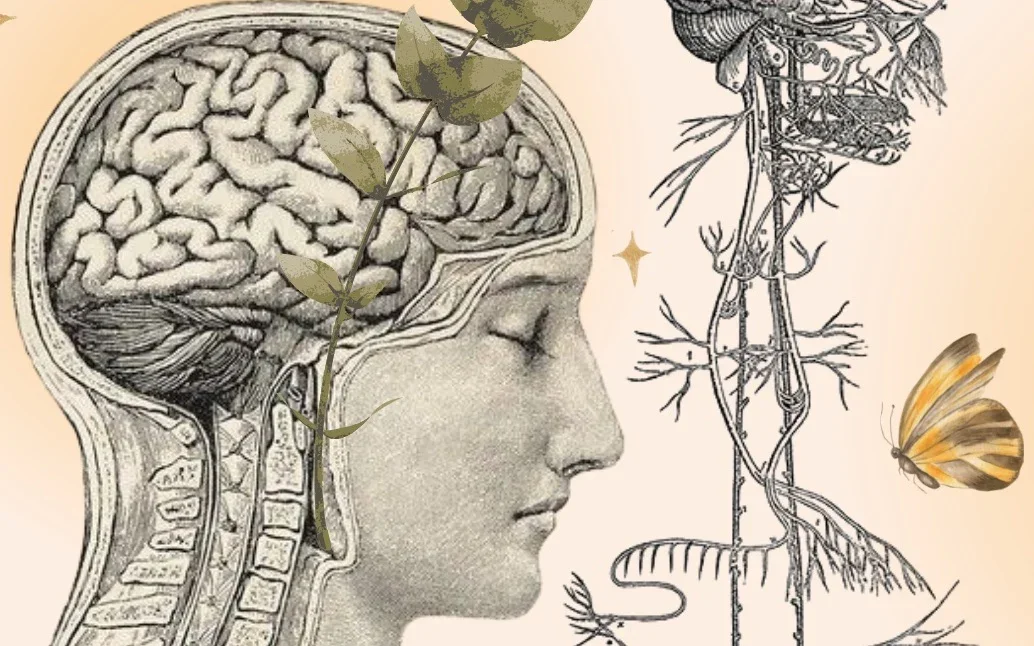
The vagus nerve is the longest and most influential cranial nerve in the body. It originates deep within the brainstem and travels downward through the neck, chest, and abdomen, branching extensively into your major organs including the heart, lungs, stomach, liver, pancreas, and intestines.
Its name comes from the Latin vagus, meaning wandering — a fitting description, as it quite literally wanders throughout your body, acting as a living communication cable between your brain and your internal organs.
But the vagus nerve is far more than just a structural connection.
It is the main regulator of your parasympathetic nervous system — the branch responsible for:
Rest and recovery
Digestion and nutrient absorption
Immune regulation
Inflammation control
Heart rate variability
Hormonal signalling
Emotional regulation
Cellular repair
In simple terms:
The vagus nerve tells your body when it is safe to heal.
A two-way information highway (not just brain → body)
Here’s something most people don’t realise:
Approximately 80% of vagus nerve fibres carry information from the body back to the brain.
Only about 20% travel in the opposite direction.
This means your brain is constantly being updated on what’s happening in your gut, immune system, heart, lungs, and tissues.
Your vagus nerve continuously reports on:
Inflammation levels
Gut microbial activity
Blood sugar stability
Nutrient availability
Oxygen status
Tissue stress
Immune activation
Your brain then uses this information to decide:
Whether digestion should proceed
Whether stress hormones should rise
Whether immune responses should activate
Whether you feel calm or on edge
So when your gut is inflamed, your digestion is impaired, or your immune system is activated, your brain feels it — and adjusts your entire nervous system state accordingly.
This is one of the foundations of the gut–brain connection.
Digestive symptoms, anxiety, fatigue, hormonal disruption, and mood changes are not separate problems.
They are part of the same neurobiological loop.
The vagus nerve as your internal safety detector
From an evolutionary perspective, the vagus nerve evolved to answer one core question:
“Am I safe?”
If the answer is yes:
Digestion turns on
Immune balance is restored
Hormones stabilise
Repair processes begin
If the answer is no:
Blood is diverted away from the gut
Stomach acid drops
Motility slows
Inflammation rises
Stress hormones increase
Muscles tighten
Healing is postponed
The body prioritises survival over digestion every time.
Modern life, however, exposes us to chronic psychological stress rather than short-term physical threats — meaning many people live in a constant low-grade survival state without realising it.
Over time, this suppresses vagal function.
This is what we refer to clinically as low vagal tone.
Vagal tone: why it matters
“Vagal tone” refers to how well your vagus nerve functions.
High vagal tone = flexibility, resilience, recovery
Low vagal tone = chronic stress physiology
When vagal tone is healthy, your body can move smoothly between activation and relaxation.
When it’s impaired, you become stuck in survival mode.
Low vagal tone is associated with:
Anxiety and panic
Depression
IBS and reflux
Chronic inflammation
Histamine sensitivity
Fatigue
Autoimmune flares
Poor sleep
Blood sugar instability
Hormonal disruption
This isn’t psychological.
It’s neurological.
Your nervous system literally loses its ability to down-shift.
The vagus nerve and digestion: where everything begins
Digestion is one of the most vagus-dependent processes in the body.
Before food even reaches your stomach, the vagus nerve initiates the cephalic phase of digestion, signalling:
Stomach acid release
Digestive enzyme production
Bile flow
Pancreatic secretion
Gut motility
This all happens before you swallow.
But under stress?
This entire cascade is suppressed.
When vagal signalling is impaired:
1. Stomach acid drops
Low acid leads to:
Reflux
Bloating
Protein malabsorption
Iron and B12 deficiency
Increased bacterial overgrowth
Reflux is often not caused by too much acid — but by too little, combined with poor vagal tone.
2. Pancreatic enzymes decrease
This impairs breakdown of:
Proteins
Fats
Carbohydrates
Leading to fermentation, gas, and incomplete digestion.
3. Bile flow becomes sluggish
The vagus nerve helps coordinate gallbladder contraction.
Reduced signalling contributes to:
Fat malabsorption
Pale or floating stools
Constipation
Elevated beta-glucuronidase
Hormone recirculation
Microbiome imbalance
4. Gut motility slows
Food stagnates.
This increases risk of:
SIBO
Constipation
Dysbiosis
Toxin reabsorption
5. Intestinal barrier integrity weakens
Vagal activity directly supports tight junctions in the gut lining.
Low tone → increased permeability → immune activation.
This is one pathway into what’s commonly referred to as “leaky gut.”
The vagus nerve and inflammation
The vagus nerve contains what’s called the cholinergic anti-inflammatory pathway.
This allows your nervous system to actively switch off excessive immune responses.
When functioning properly, the vagus nerve tells immune cells:
“Stand down. We’re safe.”
Low vagal tone removes this brake.
The result:
Chronic low-grade inflammation
Heightened histamine release
Increased pain sensitivity
Autoimmune activation
This is why stress doesn’t just feel bad — it creates inflammation at a cellular level.
Emotional stress becomes physical symptoms through the vagus nerve
The vagus nerve connects directly to brain regions involved in:
Threat detection
Emotional processing
Interoception (body awareness)
When you experience chronic emotional stress, your vagus nerve receives continuous danger signals.
Over time, this manifests physically as:
Globus sensation (lump in throat)
Tight chest
Shallow breathing
Digestive shutdown
Heart rhythm changes
Muscle guarding
The body doesn’t separate emotional stress from physical threat.
It responds the same way.
Why this matters clinically
From a functional perspective, vagal dysfunction sits upstream of many modern chronic conditions.
You cannot fully heal:
Gut disorders
Hormonal imbalance
Chronic fatigue
Histamine intolerance
Autoimmune patterns
without addressing nervous system regulation.
Supplements alone cannot override a nervous system that doesn’t feel safe.
The big takeaway
Your vagus nerve is not just a nerve.
It is your body’s central regulator of safety, digestion, immunity, and repair.
When it’s supported:
Digestion improves
Inflammation decreases
Hormones stabilise
The gut heals
The mind calms
The body regains resilience
When it’s suppressed by chronic stress, everything downstream suffers.
In simple terms:
If your vagus nerve can’t shift you into rest-and-digest…
your body cannot fully heal.
How to stimulate the vagus nerve naturally (and restore vagal tone)
6
The vagus nerve responds primarily to signals of safety.
You don’t stimulate it by forcing relaxation — you stimulate it by gently reminding your nervous system that you are not under threat.
Clinically, this means working with:
Breath
Sound
Temperature
Muscle tone
Rhythm
Presence
These inputs feed directly into vagal pathways.
Here are the most effective, evidence-based ways to improve vagal tone.
1. Slow diaphragmatic breathing (the most powerful tool)
Your breath is the fastest way to influence your vagus nerve.
Slow breathing increases vagal activity by activating stretch receptors in the lungs that directly communicate with the brainstem.
The key is longer exhales than inhales.
Try:
Inhale 4 seconds
Exhale 6–8 seconds
5–10 minutes
1–3 times daily
This improves:
Heart rate variability
Digestive signalling
Inflammation regulation
Emotional stability
Even five minutes can shift your nervous system state.
This is foundational.
2. Humming, chanting, or singing
The vagus nerve innervates the vocal cords and muscles of the throat.
Sound vibration mechanically stimulates vagal branches.
Humming is particularly effective because it creates sustained vibration.
Clinical benefits include:
Reduced anxiety
Improved digestion
Throat relaxation
Increased parasympathetic tone
Two to five minutes is enough to create measurable shifts.
This is why singing feels regulating.
3. Cold exposure to the face or neck
Cold activates the “diving reflex,” which directly increases vagal output.
You don’t need ice baths.
Try:
Splashing cold water on your face
Holding a cool pack over the upper cheeks or neck
Brief cold finish to your shower
This can rapidly reduce:
Heart rate
Panic symptoms
Nervous system activation
Especially useful during acute stress.
4. Gentle neck and jaw release
The vagus nerve travels through the side of the neck and is closely linked with jaw tension.
Chronic stress often creates guarding here.
Helpful techniques:
Gentle neck massage
Jaw relaxation
Slow head circles
Suboccipital release
This reduces mechanical compression and improves signalling.
Many people feel an immediate softening.
5. Gargling
Gargling activates muscles in the back of the throat that share innervation with the vagus nerve.
It’s surprisingly effective.
Try gargling vigorously for 30–60 seconds once or twice daily.
This supports:
Swallow coordination
Throat tension
Vagal activation
Simple, free, and neurologically sound.
6. Rhythmic movement
Walking, gentle yoga, swaying, or rocking stimulates vagal pathways through coordinated movement and vestibular input.
This is why walking often improves digestion and mood.
Aim for:
Daily gentle movement
Especially after meals
This supports gut motility and nervous system regulation simultaneously.
7. Eating slowly and mindfully
Digestion begins in the brain.
If you eat while rushed or distracted, vagal signalling is suppressed.
Before meals:
Take 3 slow breaths
Sit down
Put your phone away
This alone can improve:
Stomach acid production
Enzyme release
Bloating
Reflux
Small ritual, big physiological impact.
A clinical note
Low vagal tone is not a personal failing.
It is a biological adaptation to prolonged stress.
Many patients come in thinking they have “gut issues,” “hormone problems,” or “anxiety.”
In reality, their nervous system has been stuck in protection mode.
When vagal tone improves:
Digestion strengthens
Inflammation decreases
Hormones stabilise
Histamine sensitivity reduces
Emotional resilience returns
This is why nervous system work is not optional in functional medicine.
It is foundational.
Want more? Listen to this episode by Andrew Huberman
https://open.spotify.com/episode/22RhDr6VVwNlxmpccvpyge?si=85ZVGIJfTEurgpUPWdeaGg